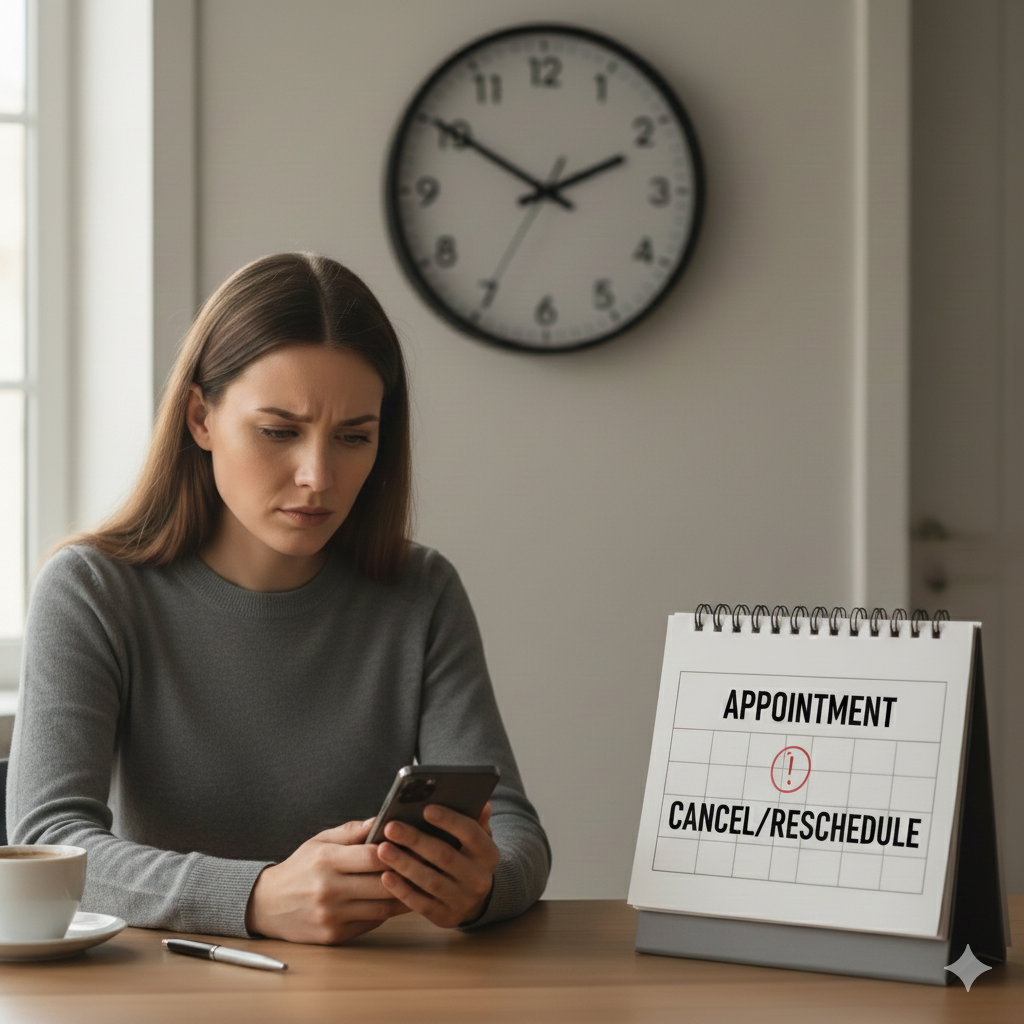
In medical institutions, the same situation repeats itself again and again: a patient knows they won’t be able to attend an appointment but doesn’t inform anyone. As a result, a time slot remains blocked in the schedule, the specialist waits in vain, and another patient loses the chance to receive care.
To effectively reduce no-shows, it’s important to understand not what patients do, but why they behave this way.
1. “I’ll let them know later” — the procrastination effect
One of the most common reasons is simple human procrastination. The patient realizes they won’t be able to attend and thinks: “I’ll cancel later.” During holidays, busy workdays, or illness, that intention gets forgotten—until the appointment time has already passed.
This isn’t malicious behavior, but rather everyday chaos and shifting priorities.
2. Complicated or inconvenient cancellation
If canceling an appointment requires calling during office hours, waiting on hold, or searching for contact details, many patients choose to do nothing. The more steps involved, the higher the chance the patient won’t notify the clinic at all.
From the patient’s perspective:
-
“I don’t want to call.”
-
“I don’t have time.”
-
“It’s too complicated.”
Silence becomes the easiest option.
3. Guilt and avoidance
For some patients, canceling an appointment feels uncomfortable. They feel guilty about “letting down” the doctor or the clinic—especially if the appointment was booked long in advance. Paradoxically, this guilt leads to avoidance: it feels easier to say nothing than to admit they won’t show up.
This factor is especially common with:
-
long-term bookings,
-
expensive or important examinations,
-
smaller clinics where communication feels more personal.
4. The illusion that “it doesn’t really matter”
Many patients don’t realize the real consequences of one uncanceled appointment. From their point of view, it’s just a missed slot. In reality:
-
the specialist loses productive time,
-
the clinic loses revenue,
-
another patient misses out on care.
If this connection isn’t clearly communicated, patients lack motivation to act responsibly.
5. Early bookings = weaker commitment
The longer the time between booking and the actual appointment, the weaker the emotional commitment. Patients may change jobs, plans, or health conditions—or simply lose motivation. Without reminders and active communication, the appointment fades from memory.
What can we learn from this?
Patient silence around no-shows isn’t random—it’s a systemic issue that can be addressed with the right tools and communication.
In practice, the most effective solutions are:
-
extremely simple cancellation (1–2 clicks),
-
clear, human-friendly reminders,
-
communication that explains why canceling matters,
-
automation that reduces the burden on both patients and staff.
In conclusion
Patients rarely act out of bad intentions—they act like humans. The better a medical institution aligns its processes with real human behavior, the fewer uncanceled appointments it will face. The solution isn’t stricter penalties, but simpler, clearer, and more accessible systems.
This is exactly where digital booking and communication tools—such as those used by Qticket—help turn good intentions into real action: timely notifications and more efficient appointment scheduling.